
Panama City Storm Damage
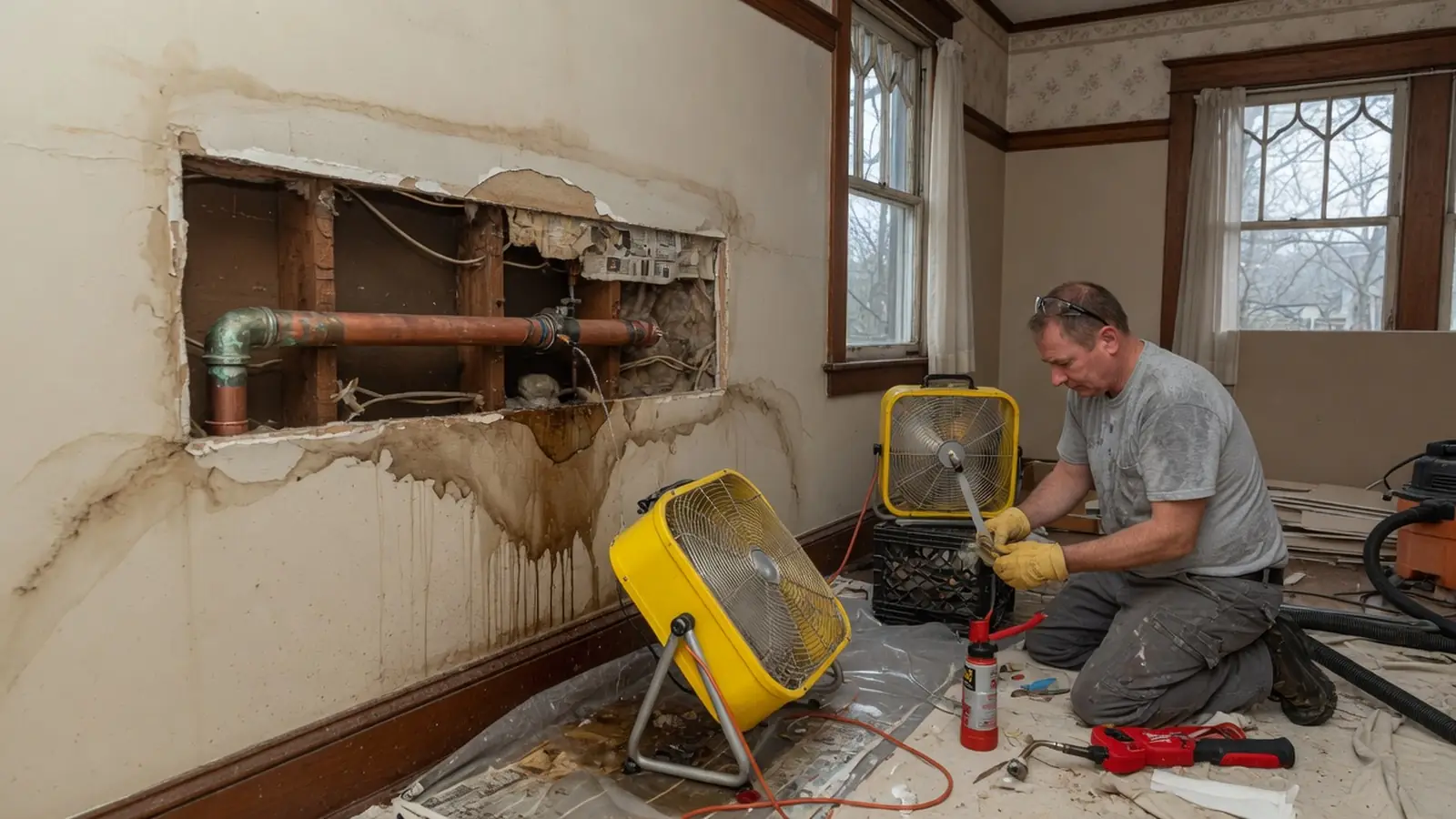
Gulf storms in Bay County often drive heavy rain horizontally into soffit vents and siding seams, soaking wall insulation even when shingles remain intact. Our trained mitigation specialists arrive quickly to halt structural water intrusion and protect your living spaces. We deploy industrial extraction equipment immediately to dry wall cavities and safeguard your property.
Call (850) 555-0165 with questions.
Prefer to talk? (850) 555-0165
Local Storm Recovery Specialists
Living and working along the Gulf Coast means confronting powerful squalls and seasonal tropical disturbances year after year.
Public discussions frequently show that new construction homes suffer from recurring roof leaks, elevated interior humidity, and mold growth caused by building envelope failures during regional rainstorms.
Homeowners often describe how severe wind-driven rain forces water past roof flashing and exterior siding, leaving homeowners uncertain whether leaks stem from structural flaws.
Property owners count on our technicians when they need to schedule our full emergency water damage restoration services after severe weather events.
A common pattern echoed in community forums is that homeowners struggle to determine whether extensive remediation estimates specifying negative air machines and plastic containment represent standard industry procedures or inflated costs.
Our crew clarifies every mitigation scope upfront using calibrated diagnostic instruments so clients understand exactly what equipment is necessary.
Our Proven Storm Recovery Process
Local video documentation shows how Gulf storm surge drives water directly into coastal bayous, flooding sheltered waterfront properties away from open-beach coastlines. We show homeowners how our technicians handle complete flood cleanup to restore stability quickly.
- Emergency Assessment And Diagnostics. Homeowners struggle to distinguish between active water leaks and historical stains on soft drywall without professional moisture meter diagnostics. Furthermore, homeowners experience unexpected yard drainage overflow and street flash flooding during intense coastal downpours despite being outside official FEMA flood zones, so our team inspects all exterior foundations and indoor boundaries immediately.
- Water Extraction And Material Removal. Residents navigating post-storm flood recovery seek clear guidance on tearing out porous building materials up to four feet and coordinating drying equipment to stop recurring mold. Our team extracts pooled water rapidly and safely removes saturated drywall and baseboards according to strict industry standards.
- Structural Drying And Dehumidification. Trapped moisture behind baseboards and within wall cavities lingers for weeks after severe tropical storms, causing swelling and persistent musty odors. We position commercial centrifugal air movers and LGR dehumidifiers to pull moisture from deep inside framing and subfloors.
- Moisture Verification And Antimicrobial Treatment. Our technicians monitor relative humidity and thermal imagery daily until dry standards are verified across all building assemblies. We apply botanical antimicrobial treatments to stop microbial growth and certify the structure ready for reconstruction.
Our Workmanship Standard And Structural Promise
Coastal storm records demonstrate that storm surges topping 5.5 feet above high tide push water over 20 feet beyond normal surf zones, damaging beachfront accessory structures. Our workmanship standard ensures that every affected perimeter receives thorough water extraction and structural drying before any repairs proceed. Our guarantee includes rigorous drying protocols alongside certified structural mold remediation solutions that eliminate hidden moisture pockets. We hold every project to strict IICRC standards, validating that building framing reaches baseline equilibrium before sign-off.
Emergency Roof Tarping And Board-Up
Property owners frequently ask how quickly does an emergency roof tarp need to be installed after a hurricane or severe storm to prevent secondary ceiling collapse. Our dispatch crews arrive rapidly to secure heavy-duty tarps over punctured decking and board broken window openings. This protective barrier stops secondary rain intrusion while long-term restoration plans are organized.
Rapid Standing Water Extraction
We deploy truck-mounted extractors and submersible pumps to remove standing water from living areas, garages, and crawlspaces. Removing water in the initial hours reduces long-term structural warping and foundation saturation. Our team documents all moisture readings throughout the extraction phase.
Cavity Desiccant And Structural Drying
High-velocity drying equipment forces conditioned air into closed wall assemblies, sill plates, and subfloor materials. We track evaporation rates across daily monitoring cycles to return structural framing to safe moisture thresholds. This process prevents drywall decay and microbial outbreaks inside enclosed walls.
Dedicated Storm Recovery Across The Region
Our restoration approach centers on disciplined moisture containment, verified thermal monitoring, and clear communication from initial dispatch through final inspection. We maintain specialized drying equipment ready for immediate deployment when tropical fronts hit coastal communities.
- 13Zip Codes Served
- 8Service Areas
- 3Services Offered
Local homeowners rely on our mitigation technicians to stabilize structural damage and extract storm water when severe weather strikes.
“The initial estimate matched our final invoice down to the cent after tropical winds pushed water through our upper gable vent. The crew explained every line item before placing the air movers, so there were never any surprise fees or sudden change-orders. Having that transparent pricing during an emergency gave our family tremendous peace of mind.”
Marcus H.
“Inspecting the baseboard cuts and drywall joint seams after drying showed me how meticulous their work really is. The technicians removed only the damaged lower drywall along perfectly level lines, leaving clean wall stud cavities with zero ragged paper edges. That level of precision made our drywall refinishing completely painless.”
Danielle V.
“My next-door neighbor hired this company the very next morning after watching them dry out my flooded garage so efficiently. I gladly passed along their card because they brought commercial dehumidifiers within hours of the gale passing. Recommending them was an easy decision after seeing their diligence firsthand.”
Julian K.
“While pulling wet insulation beneath our dining room subfloor, the team discovered a rusted drainage pipe joint that had separated under storm pressure. Instead of panicking or stalling the job, they immediately alerted us, isolated the area, and kept their drying equipment running smoothly around the repair. Their calm, professional attitude kept our entire restoration on track without any hassle.”
Colleen B.
Frequently Asked Questions
How quickly does an emergency roof tarp need to be installed after a hurricane or severe storm to prevent secondary ceiling collapse?
An emergency roof tarp should be installed within twenty-four hours to prevent water from saturating attic insulation and collapsing ceilings. Rapid tarping secures vulnerable decking against secondary rain, allowing interior structural drying to proceed safely.
How do technicians distinguish between active water leaks and old stains on drywall?
Technicians use non-invasive moisture meters and thermal imaging cameras to measure current moisture levels behind discolored drywall. This diagnostic process pinpoints whether moisture is actively spreading or if the mark represents an inert stain from a past storm event.
Why is drywall removed up to four feet high after indoor flood water intrusion?
Porous building materials like drywall wick moisture upward, requiring removal up to four feet to eliminate hidden contaminants and mold. Cutting along a clean four-foot line provides adequate clearance to dry wall studs and expedites subsequent sheetrock reconstruction.
Are negative air machines and plastic containment standard during storm remediation?
Plastic containment barriers and negative air scrubbers are standard protocols to isolate airborne spores while drying structural framing. These industry measures prevent mold spores and fine particulates from cross-contaminating unaffected living quarters during remediation.
How long does it take to dry trapped moisture inside wall cavities after a coastal storm?
Complete structural drying inside wall cavities typically requires three to five days using industrial dehumidifiers and air movers. Technicians track moisture content daily to ensure hidden dampness behind baseboards is eliminated before walls are sealed.